
Cross-Comparison of CMR, SMR, and TRIM Protocols in Modern Storage Engineering
Physical Architecture: Distinguishing CMR from SMR Technology
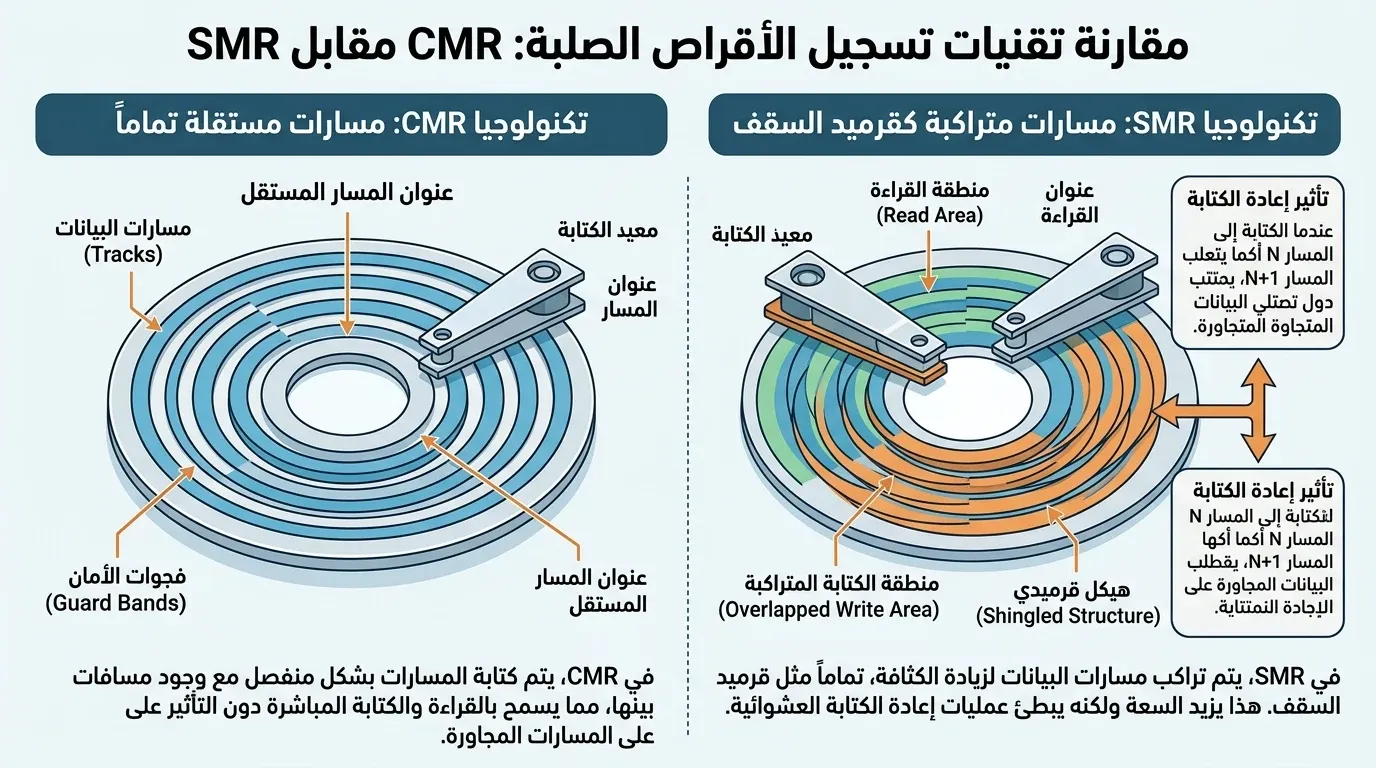
Hard drive architectures differ fundamentally in how magnetic tracks are organized and written to the platter surface. In modern storage engineering, mechanical design splits into two primary methods for placing physical sectors on platters.
CMR/PMR Technology: Discrete Parallel Tracks
Conventional Magnetic Recording (CMR) technology relies on writing data across discrete, parallel tracks separated by guard bands. The track width corresponds directly to the width of the write element in the head assembly. This design allows any individual sector to be modified directly without altering adjacent physical tracks.
SMR Technology: Overlapped Tracks for Density Scaling
Shingled Magnetic Recording (SMR) technology utilizes a reader element in the head assembly that is 4 to 5 times narrower than the writer element, where the write element spans approximately 50 µm and the read element spans 10 µm. Tracks are written in an overlapping pattern resembling roof shingles, increasing track density by up to 25%. These shingled tracks are grouped into discrete operational zones known as bands.
Secondary Translators and Media Cache Mechanics in SMR Drives
The shingled architecture of SMR introduces severe latency during write operations, as modifying a single sector requires reading and rewriting the entire target track and all subsequent tracks within that band.
Band Management and Pending Extent Updates
To mitigate severe write performance degradation, Drive-Managed SMR drives redirect incoming write operations to non-shingled buffer areas known as Media Cache on Seagate drives or T2 on Western Digital drives. The drive controller employs a Secondary Translator to map logical block addresses (LBA) to newly allocated physical locations. Data is subsequently flushed from the cache to the shingled bands during idle periods. Critical file system structures, such as NTFS Master File Table (MFT) records, frequently remain cached in these staging areas.
TRIM Command Mechanics and Its Impact on Data Recovery
The TRIM command is a low-level instruction issued by modern operating systems to notify storage devices of unallocated or deleted LBA ranges.
Zero-Filled Sector Behavior Following Quick Format Operations
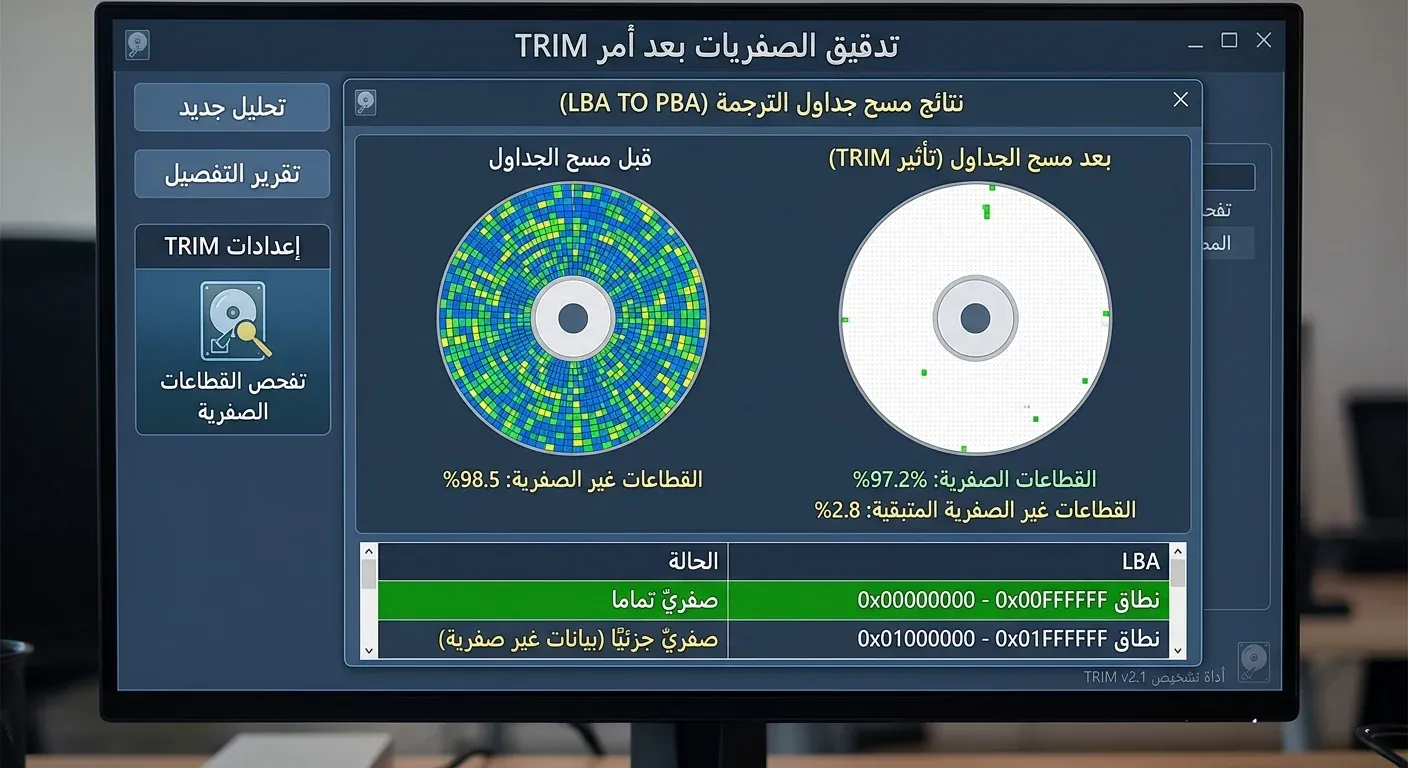
When a TRIM command or Quick Format is executed on SMR HDDs or SSDs, the drive firmware purges the LBA mapping entries within the secondary translator. Consequently, the drive returns solid zeroes upon reading any logical address, even though the raw data remains physically present on the platters or NAND cells.
Engineering Recovery Protocols for SMR and TRIM Challenges
Data recovery from SMR devices in our engineering lab demands strict protocols to prevent firmware-level initialization from destroying the secondary translator.
We execute “Lock User Area Writing” commands immediately upon establishing utility communication to prevent the drive firmware from updating the compromised translator or running background garbage collection. In cases of zero-filled sectors resulting from TRIM, we utilize Physical Block Access (PBA) reading and RAW recovery algorithms, along with virtual translator reconstruction in RAM using PC-3000 utilities to bypass corrupted cache extents and safely reconstruct the file system.
Need professional help?
Our experts at Al-Fares Center are ready to recover your data using state-of-the-art technology with a 95%+ success rate.